
Following After Jesus Together: Vocation
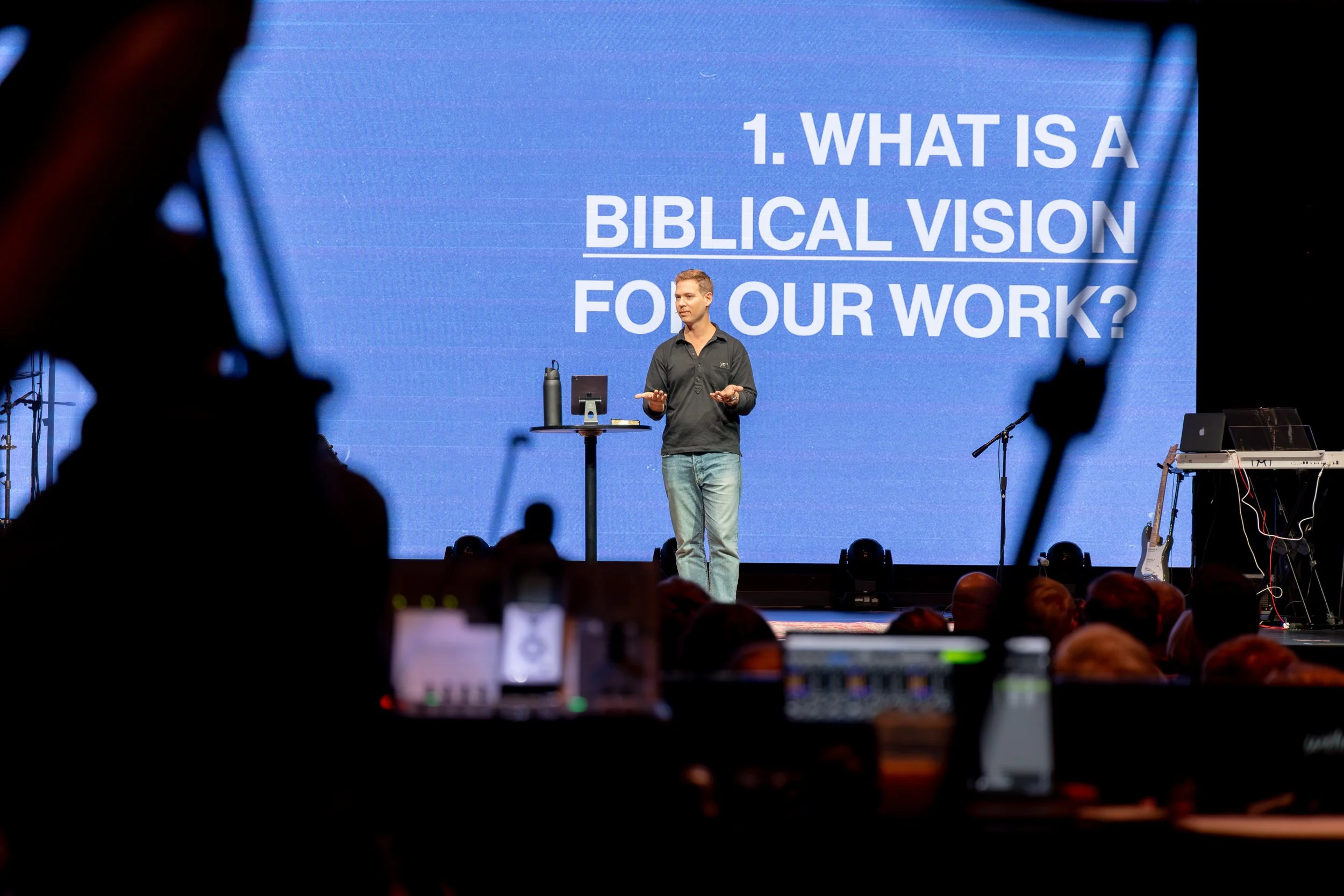
The God of the Bible is not like the other gods of the ancient world. Other creation stories pictured the world emerging from violence, conflict, and rivalry among the gods. But Genesis gives us a radically different vision. Our God does not create out of the chaos. God brings order to the chaos. (See the Epic of Gilgamesh for an ancient contemporary to our creation story.) He assigns function and meaning to the things that fill our world. Then God does something extraordinary.
Genesis 1:26 says:
“Let us make human beings in our image, to be like us.”
This word image could also be called “icons”. In the other creation myths of the day, the icons would be be statues set up to represent the gods, or at best it would be the royals. But the story of Yahweh's creation (that is the personal name of God) say he made us his icons. All of us no matter how seemingly great or small.
He created us to be in relationship with him, and to function like him. We were created to reflect his character and continue his work. We were made to take what God has created and rule over it, cultivate it, and guard it. We were made to take the raw material of creation and create culture.
The Original Vocation
God placed humanity in the Garden of Eden with a calling:
“The Lord God took the man and put him in the Garden of Eden to work it and take care of it.”(Genesis 2:15)
The words translated “work” and “take care of” are loaded with meaning. To work the garden means to cultivate it and cause it to flourish. Adam was not placed in the garden merely to lay back and enjoy its fruit. He was called to develop its potential.
God made wheat, but humans make bread. God made trees, but humans make tables. God made the elements, and humans discover them and make things out of them.
Humanity’s original vocation was to cultivate and guard God’s world. The garden was never meant to remain contained within its original boundaries. God told humanity to be fruitful, multiply, fill the earth, and exercise dominion.
Human beings were to carry God’s order, goodness, beauty, justice, and presence into the wider world until the whole earth reflected the culture of God. This calling remains at the heart of every good vocation.
Work Brings Order
We all know bad work when we see it. There are few things worse in modern life than going to get your garbage cans, and one bag being left in the bottom to rot for another week. But it could get much worse.
Have you ever been in New York City when bags of garbage were piled along the sidewalks waiting to be collected? Now imagine that no one ever came. What would happen? The bags would pile up. The smell would compound as the garbage decayed. Now it would be a great day for the rats… but not so much for us humans. Streets would become unusable. Daily life would begin to break down. See this: The sanitation worker stands between a functioning city and total chaos.
The same is true of countless vocations. A good teacher takes confusion and creates understanding. A good doctor confronts sickness and works toward healing. A good accountant takes financial disorder and creates clarity. A good mechanic takes a broken machine and restores its function. A good parent takes the chaos of a household and creates an environment where children can grow. A good contractor takes raw materials and creates a home. A good artist takes an empty canvas and fills it with beauty. A good police officer protects a community from violence. A good counselor enters emotional confusion and helps someone discover a path toward wholeness. A good server creates a place where people can receive nourishment and hospitality. A good custodian takes what has become dirty and restores it.
Not every job has the same status in our culture, but every job done well has equal dignity and purpose as we image God and bring order to chaos.
Sin Frustrated Our Work
But if work is such a beautiful thing, why is it often so terrible? Why do emails endlessly pile up? Why was that Ikea furniture missing a part? Why is my coworker so difficult? Why do we slave away at things that fall apart?
We have to first see this: Work existed before sin entered the world. Work is not the curse. But sin cursed our experience of work. Genesis three says that after humans rejected God’s rule and chose self rule in the garden, the ground began to produce thorns and thistles. The things we work on began to fight back.
Now some people use work to exploit others. Sin. Some avoid work and force others to carry their responsibilities. Sin. Some turn work into an idol and measure their worth by productivity, income, or status. Sin. Because of sin, work becomes disordered.
Instead of cultivating the world, we consume it. Instead of guarding what is good, we neglect it. Instead of serving people, we use them. Instead of working from our identity, we work desperately to create an identity. But Jesus came to redeem everything sin has distorted, including our vocation.
Jesus Calls Us Back To Our Divine Vocation
Through Jesus, we are not simply forgiven for what we have done. We are restored to what we were made to be.
Jesus as the perfect image of God, to restore to use our original imager bearing potential. He perfectly reveals what humanity was always intended to look like. Jesus entered disorder and brought peace. He entered sickness and brought healing. He entered hunger and provided bread. He entered exclusion and created belonging. He entered sin and offered forgiveness. He entered death and brought resurrection life. Everywhere Jesus went, the kingdom of God confronted chaos.
Now Jesus calls us to follow him into the world. That means your workplace is not separate from your spiritual life. Your job may not be your entire calling, but it is one of the places where you practice your calling.
Now here is where things can break down in the church: We view the only holy vocation as work done in the church or out on the mission field. If we don’t do that the next best thing we can do is take our work and fund ministry. That is such an emaciated, anti-biblical view of work.
You do not have to be employed by a church to do holy work. You do holy work whenever you use your gifts to create what is good, protect what is valuable, solve what is broken, and serve the people God has placed around you. Why? Because good work brings order to chaos, and that act is inherently loving to your neighbor. The carpenter honors God and loves their client by making a good table. The surgeon honors God and loves their patient by operating with skill. The business owner honors God and loves their employees by treating them fairly. The employee honors God and loves their boss by being dependable.
We do good work because people will be affected by what we produce. Someone will sit in the chair you built. Someone will drive across the bridge you designed. Someone will receive the medication you prepared. Someone will learn from the lesson you teach. Someone will walk into the room you cleaned. Someone will live inside the culture you helped create. The details of our work matter because people who are impacted by our work matter.
Application
So ask yourself:
What has God placed under my care? What needs to be cultivated? What needs to be guarded? Where is there confusion that I can help clarify? Where is there disorder that I can help organize? Where is there suffering that I can help relieve? Where is there something good that I can help grow?
You were made in the image of the God who brings order to chaos. Through Jesus, you have been called back into that holy vocation.
Your work matters. So build good tables. Teach good lessons. Raise healthy children. Lead honest businesses. Repair broken machines. Collect the garbage. Care for the sick. Create beautiful things. Protect what is vulnerable. Serve the people in front of you. Cultivate what is good. Guard what God has entrusted to you. And through your work, you will image God and help the culture of God’s kingdom spread throughout the earth.
Daily Prayer For This Week
Pray Psalm 63:
O God, you are my God; eagerly I seek you; my soul thirsts for you, my flesh faints for you, as in a barren and dry land where there is no water. Therefore I have gazed upon you in your holy place, that I might behold your power and your glory. For your loving-kindness is better than life itself; my lips shall give you praise. For you have been my helper, and under the shadow of your wings I will rejoice. My soul clings to you; your right hand holds me fast.
Pray for the day ahead:
In God's presence, think through the day ahead:
the work you will do, the people you will encounter, the dangers or uncertainties you face, the possibilities for joy and acts of kindness, any particular resolutions you need to renew, consider what might draw you from the love of God and neighbor, the opportunities you will have to know and serve God and to grow in virtue, remember those closest to you and all for whom you have agreed to pray, ask God's blessings, guidance, and strength in all that lies before you.
Close in prayer:
Heavenly Father, in you we live and move and have our being: We humbly pray you so to guide and govern us by your Holy Spirit, that in all the cares and occupations of our life we may not forget you, but may remember that we are ever walking in your sight; through Jesus Christ our Lord. Amen.
(This practice is from Saint Augustine's Prayer Book)
